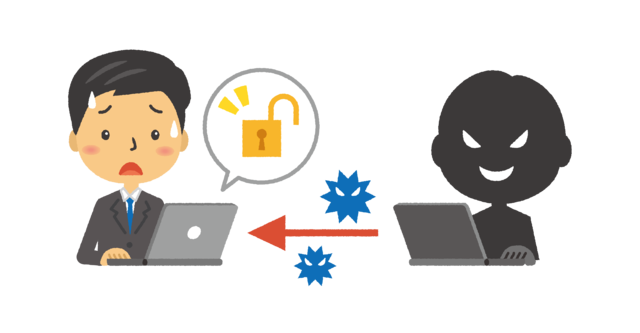





Voice over IP networks can be challenging to implement efficiently and securely. This is in part because voice packets require specialized management and must be treated differently than normal data packets. Quality of Service (QoS), security and flow control are just some areas in which the required handling of voice traffic differs from conventional data traffic.
The good thing is that with the proper expertise and care, many of these issues can be successfully dealt with within the corporate network. Such networks are under the complete control of the network administration team and thus can be fully customized for the needs of the voice being transmitted.
However, what happens when voice packets are routed beyond the corporate network, either for voice calls to the PSTN or mobile network, or for employees who use internal voice network services remotely? Here we look at various network edge mechanisms that can be used to monitor and manage data traveling in and out of the LAN.

TeleDynamics Think Tank
Implementing VoIP safely and efficiently on the network edge
Topics: QoS, VoIP, Total Voice Solution, Trends, Network Security, Network Design
For a safe new year, you need more than a firewall
By John Macario, SVP of Product Management and Marketing at Edgewater Networks
The beginning of a new year is a time when many business managers reflect on learnings from the previous year and begin working on their goals for the current year. Business continuity and data security are, of course, top priorities and securing the network is a vital part of this.
For network professionals, there is no word more fearsome than “breach.” A security breakdown can mean lost data, stolen secrets, expensive lawsuits, and more. According to IBM, the average cost of a data breach is now US$4 million. This is why nearly every organization that knows what's good for it now invests in antivirus, data loss prevention (DLP), and of course, firewalls.
These days, however, we need to protect more than just data. Enterprise communications have grown into a multi-billion dollar market, particularly due to the widespread adoption of VoIP and unified communications (UC) services. This presents a new challenge that firms will have to face in order to gain a winning edge: voice security. IP phone services present a whole new attack area to potential hackers, a frontier that firewalls simply cannot protect by themselves. The essence of this challenge lies in the fact that we're talking about two entirely different types of information transmission that, in turn, require different security solutions.
Topics: QoS, VoIP, Network Security
Five reasons you should add an SBC to your IP network
We consider session border controllers (SBCs) to be a best practice in most enterprise contexts because of the improved security, control and overall VoIP system functionality they lend.
So what exactly are SBCs and why do you need one?
Topics: SIP Phones, QoS, Business Telephone System, VoIP, SIP, Total Voice Solution, Network Security
Wi-Fi network security: Do you have a blind spot?
Some businesses do a good job of securing their data network (local area network or LAN) but forget to secure their wireless network. Despite all the pains they took to secure their LANs, their network is as vulnerable to entry as a locked car with the windows rolled down. Wi-Fi network security is a common blind spot, especially for small businesses. Here we look at some basic steps companies can take to lock down their Wi-Fi networks.
Topics: VoWi-Fi, Business Telephone System, Network Security
Because VOIP telephone systems send voice over a packet network, they are just as vulnerable to data breaches and cyberattacks as any other IP (Internet protocol) application. According to The Sileo Group, a data security think tank, fully 60% of small companies go out of business within a year of a data security breach.
“Cybercrimes hit companies of all sizes and affect their bottom line to the tune of several years of profit,” asserts John Sileo, CEO of The Sileo Group.
The good news is, if your data network is secure, your VOIP voice transmissions are in some ways even more secure than a traditional analog phone system. And most risks can be mitigated by putting some basic best practices in place.
Topics: SIP Phones, IP PBX, Business Telephone System, VoIP, SIP, Network Security
Welcome to our Think Tank
In this blog you'll read our thoughts on business telephone systems. While a lot has changed in telecom since TeleDynamics was founded in 1981, we remain as committed as ever to delivering the best customer service in the industry.
If you would like elaboration on a specific topic, please let us know in the comments section.
Happy reading and thanks for stopping by!
Receive New Articles by Email
Recent Posts
- Securing VoIP communications with SIP over TLS and SRTP
- Grandstream adds Pro AV capabilities to its GWN7800 Pro switch lineup
- Copper cabling categories explained: which cable should you choose?
- How AVLANs and AVIoT are reshaping collaboration networks
- Yealink MeetingBar A25 brings AI video to focus rooms
Posts by Topic
- 5G
- AI
- Android
- Avaya
- Bluetooth
- Boom Collaboration
- Business Continuity
- Business Strategy
- Business Telephone System
- Case Study
- Catalog
- Cisco
- Cloud
- Collaboration
- Communication
- Conferencing
- CPaaS
- Customer Service
- Customer Success Story
- CyberData
- DECT
- Emergency communications
- Events
- Facility Management
- Firewall
- Firmware Upgrades
- FoIP
- Gateway
- Grandstream
- Headsets
- Home Security
- IoT
- IP PBX
- Jabra
- Konftel
- Leasing
- Microsoft
- Mobile
- Mobility (including remote work)
- NEC
- Network Design
- Network Infrastructure
- Network Security
- News
- OTT VOIP
- Outsourcing
- Panasonic
- Peripherals
- PoE
- Polycom
- Power Management
- Product Review
- Productivity
- Protocols, codecs & standards
- QoS
- Regulations
- Routers
- SD-WAN
- SIP
- SIP Phones
- Snom
- Software Integration
- Surveillance
- Switches
- Total Voice Solution
- TP-Link
- Trends
- Troubleshooting
- UCaaS
- Unified Communications
- Videoconferencing
- VLAN
- Voicemail
- VoIP
- VoWi-Fi
- VTech
- WAN Technology
- Wi-Fi
- Wireless
- WISP
- Yealink
- Yeastar
- Zoom