For employees with hearing loss, phone calls can be one of the hardest parts of the workday. And with approximately 1 in 6 working-age adults experiencing some degree of hearing loss, the need may be more widespread than many employers realize.
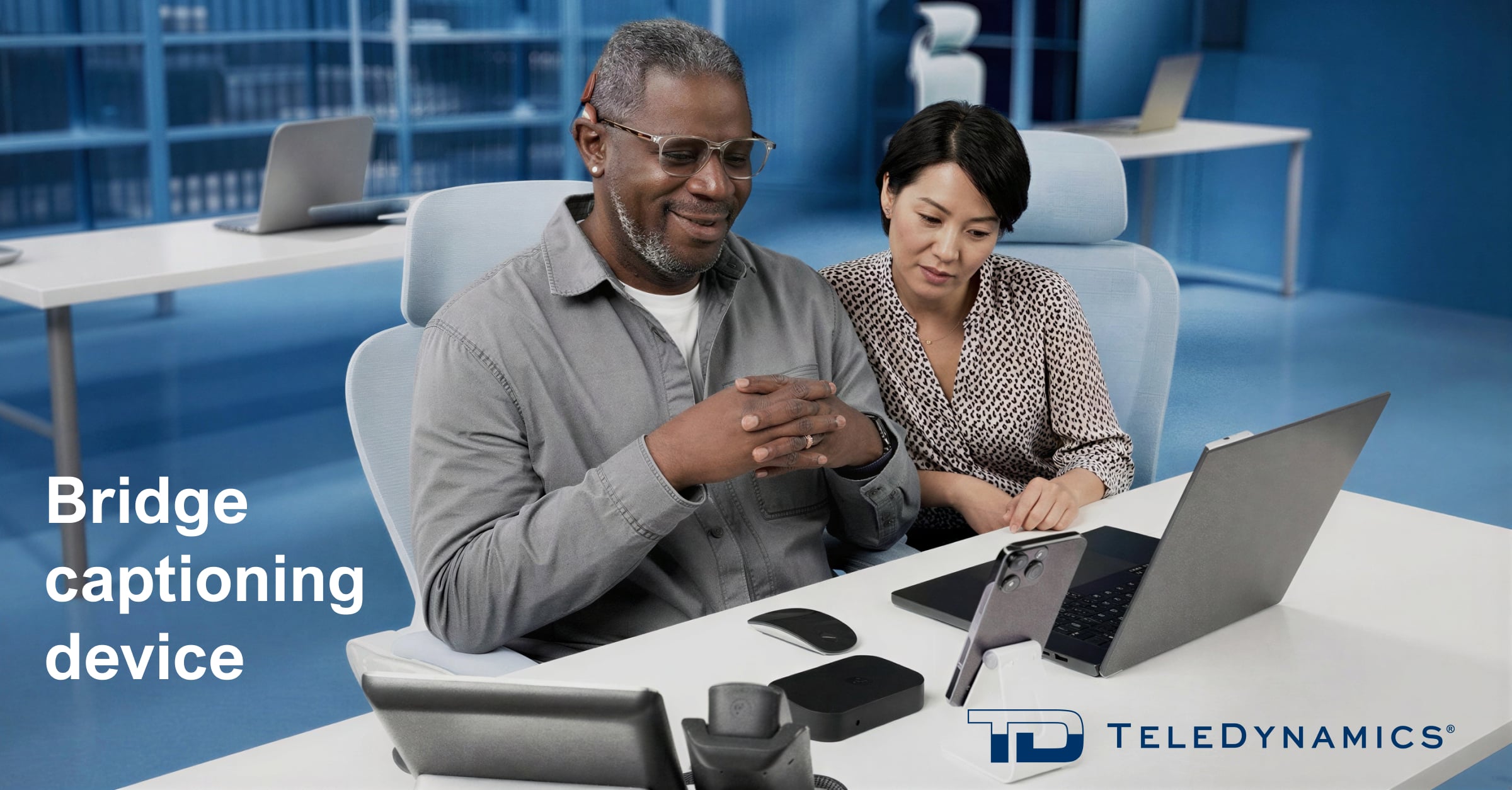
Bridge was created to make workplace communication fully accessible for people with hearing loss. The compact hardware device connects to VoIP phones and computer softphones to deliver real-time captions for every call, helping employees participate on equal footing without changing how the rest of the team works.
But accessibility is only part of the story. In practice, Bridge is seeing the benefits extend further than expected. Captions can improve comprehension and retention even for people without hearing loss, and they can make it easier for employees to follow fast-moving conversations in a non-native language.
In other words, the Bridge captioning device can be a valuable accessibility tool while also bringing broader productivity and inclusion benefits to the workplace.
In this article, we take a closer look at this clever device and why it’s worth considering for virtually any unified communications or business telephony deployment, regardless of whether hearing accessibility is the primary need.