Daniel Noworatzky
Chief Technology Officer, TeleDynamics
Product Review
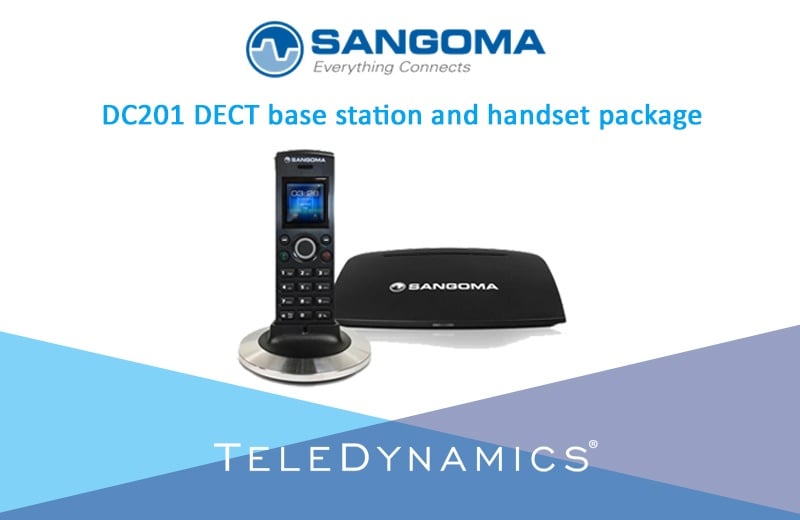
Sangoma offers an ideal solution for the mobile employee in its new DC201 DECT Base + Handset system. This is a package that includes a DB20 DECT base station with a single D10 handset. The DC201 is an ideal starting point for establishing an internal wireless telephony system which you can later expand by adding additional handsets, as well as additional base stations to expand the coverage area.
Read More
Topics:
Wireless,
Mobility (including remote work),
DECT,
Product Review
Product Review
Sangoma has raised the bar for entry-level IP phones with the s205. Now, the robust feature sets ordinarily reserved for executive-level phones are available on this entry-level endpoint, giving access to productivity-enhancing functionality to all the employees in your organization, while controlling costs at the same time.
Read More
Topics:
SIP Phones,
Business Telephone System,
VoIP,
SIP,
Product Review
Product review
In many workspaces, internal mobility is vital. This is especially true of businesses that have extensive facilities such as warehouses, factories, hotels, schools, or even university campuses where employees are required to physically move from place to place to get their jobs done. In these kinds of enterprises, professionals must be reachable no matter where they are on campus.
Grandstream’s DP750 DECT VoIP base station enables this type of mobile connectivity by combining two reliable technologies: DECT and VoIP. This base station delivers wireless coverage of up to 300 meters outdoors and 50 meters indoors for up to five DP720 DECT handsets, allowing five concurrent calls while supporting up to ten SIP accounts.
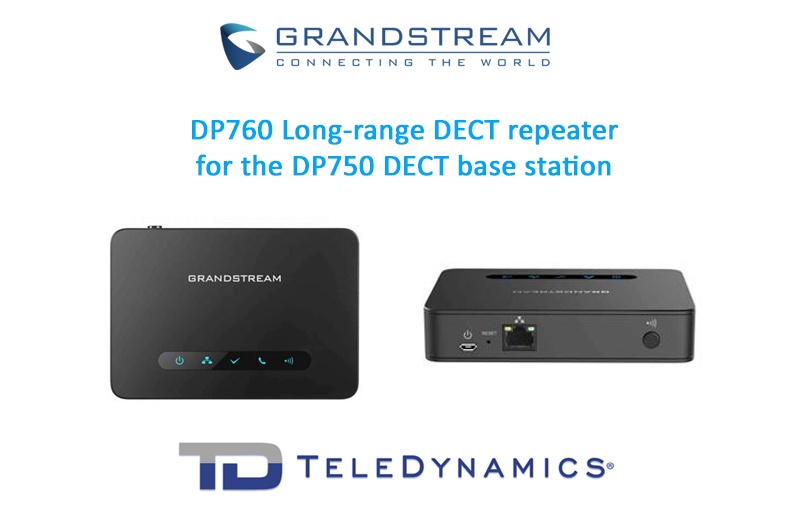
For organizations that need to cover an even greater surface area, Grandstream has launched the DP760 long-range wideband DECT repeater for extending the coverage area of the DP750 base station.
Read More
Topics:
Wireless,
Business Telephone System,
VoIP,
Grandstream,
Mobility (including remote work),
DECT,
Product Review
Session Initiation Protocol (SIP) has become the de-facto standard protocol for voice-over-IP (VoIP) phone systems. What does it do and why has it won out over other protocols? We address these questions and more in this article.
Read More
Topics:
VoIP,
SIP
How to troubleshoot problems arising from blocked ports, ACLs, firewalls, NAT, and more
For networking professionals, one of the most difficult things to deal with is troubleshooting VoIP issues, because the troubleshooting process for VoIP is not always intuitive. Answers to the questions, “What could be wrong?” and “What should I check first?” are not always readily apparent.
To aid your troubleshooting and allow you to take some meaningful actions before reaching out to your telco or vendor help desk, we’ve listed the most common VoIP problems you may face, as well as their causes and solutions.
Read More
Topics:
VoIP,
Troubleshooting
One of the most common matters we discuss with customers on our support calls is network security – specifically, how to lock down SIP Trunks, IP PBXs, SIP phones, and routers from hacking. Here we review different ways hackers can break into your voice network and the steps you can take to secure your system.
Read More
Topics:
SIP Phones,
IP PBX,
SIP,
Network Security,
Routers
How you connect to the internet will impact your VoIP phone system
Because SIP trunks leverage the WAN technology used to connect to the internet, it is imperative to understand how the choice of WAN technology will impact the functionality of the SIP trunk. There are different ways to connect to the internet, and each has implications for voice traffic.
In this article, we discuss the main considerations to take into account when choosing between MPLS, metro Ethernet, LTE and SD-WAN.
Read More
Topics:
Business Telephone System,
VoIP,
SIP,
Network Design
If you have customers that have not yet migrated to VoIP and are thinking about making the switch, this would be a great time to do it. According to the FCC, VoIP telephone subscriptions in the U.S. have been growing at a compound annual growth rate of 10% since 2013, and retail switch access has been declining by 11% annually during the same period. At that rate, VoIP subscribers now outnumber switched access customers, and ISDN connections are quickly sliding into obsolescence. SIP trunking is becoming the standard for PSTN connectivity.
To ensure a smooth transition, start by helping your customers answer these four basic questions to set them up for success.
Read More
Topics:
IP PBX,
Business Telephone System,
VoIP,
Trends,
Business Continuity,
Business Strategy
Back in May we reviewed Yealink’s innovative T5 smart media phones. Now, Yealink has introduced the Version 40 firmware upgrade for these phones, adding to an already impressive arsenal of features and functionalities.
Read More
Topics:
VoIP,
SIP,
Yealink,
Firmware Upgrades,
Videoconferencing,
Android,
Product Review