Daniel Noworatzky
Chief Technology Officer, TeleDynamics
UC is an area of telecom that has seen massive, rapid change in recent years. However, even given radical technological shifts, some principles remain the same. The need for quality of service (QoS) is one of them.
In this article, we take a fresh look at QoS from the vantage point of today’s UC, taking into account not only advances in QoS itself, but also in the underlying network infrastructure that serves it.
Read More
Topics:
QoS,
Unified Communications,
UCaaS
As the end of the year approaches, we are grateful for our wonderful manufacturers and customers. For our last article of 2025, we thought we’d end off with a bang by reviewing Yealink’s new T7 series of IP phones. This new generation of Yealink SIP phones is bringing some of the most cutting-edge capabilities to enterprise and office deployments.
Yealink has also launched an impressive T8 series, which we will review in early 2026, so continue watching this space!
Read More
Topics:
SIP Phones,
Wireless,
Yealink,
Product Review,
Bluetooth,
PoE
Now that video communications have become a defining part of modern collaboration, it’s natural to wonder whether traditional voice-only VoIP systems still have a meaningful place in today’s environment.
For businesses evaluating their communications strategy, this question matters. Understanding where voice is headed helps leaders make informed decisions about infrastructure, reliability, user preferences, and long-term planning. In this article, we take a look at voice and video and explain why these two technologies will continue to coexist well into the future.
Read More
Topics:
VoIP,
Grandstream,
Trends,
Videoconferencing,
Yeastar,
Network Infrastructure
If you’ve ever left a meeting wondering what the key takeaways were, spent hours writing follow-up notes, or juggled too many communications tools that don’t quite talk to each other, help is here. Unified communications (UC) platforms are getting a major intelligence boost, and it’s transforming the way teams collaborate.
Read More
Topics:
Trends,
Productivity,
Unified Communications,
AI,
UCaaS
What if your next great meeting could happen anywhere, without compromising sound quality or convenience? Whether you’re working from home, in a shared workspace, or on the road, Yealink’s new SP9x series speakerphones make it possible to bring professional-grade audio with you wherever you go.
The SP92 and SP96 are compact enough to slip into a laptop bag yet powerful enough to turn any room into an instant conference space. With long-lasting batteries, wireless connectivity, and AI-powered noise cancellation, these portable speakerphones are designed for performance and ease of use.
In this article, we take a closer look at what makes Yealink’s SP92 and SP96 stand out and why they’re redefining what a truly mobile conference experience can be.
Read More
Topics:
Wireless,
Yealink,
Mobility (including remote work),
Conferencing,
Product Review
When a customer complains that “the phones keep cutting out” or that “the video meetings are glitchy,” you know the pain of trying to track down the cause. Is it the internet provider? The PBX? The router? Maybe a burst of packet loss somewhere between branch offices? By the time you find the culprit, the customer’s already frustrated.
That’s why forward-thinking telecom pros are turning to a smarter, more proactive way to catch problems before users ever notice them. It’s called synthetic monitoring, and instead of waiting for real users to experience issues, it creates artificial “test calls” and “test meetings” that continuously check system performance from different points on the network. Think of it as a team of virtual users constantly making sure that every part of your VoIP and UC infrastructure is healthy and ready for the real thing.
In this article, we explain how synthetic monitoring works, how it differs from traditional passive monitoring, and why it's becoming an essential part of reliable VoIP and UC deployments. Understanding this approach can help you reduce downtime, speed up troubleshooting, and deliver a better experience all around.
Read More
Topics:
QoS,
VoIP,
Troubleshooting
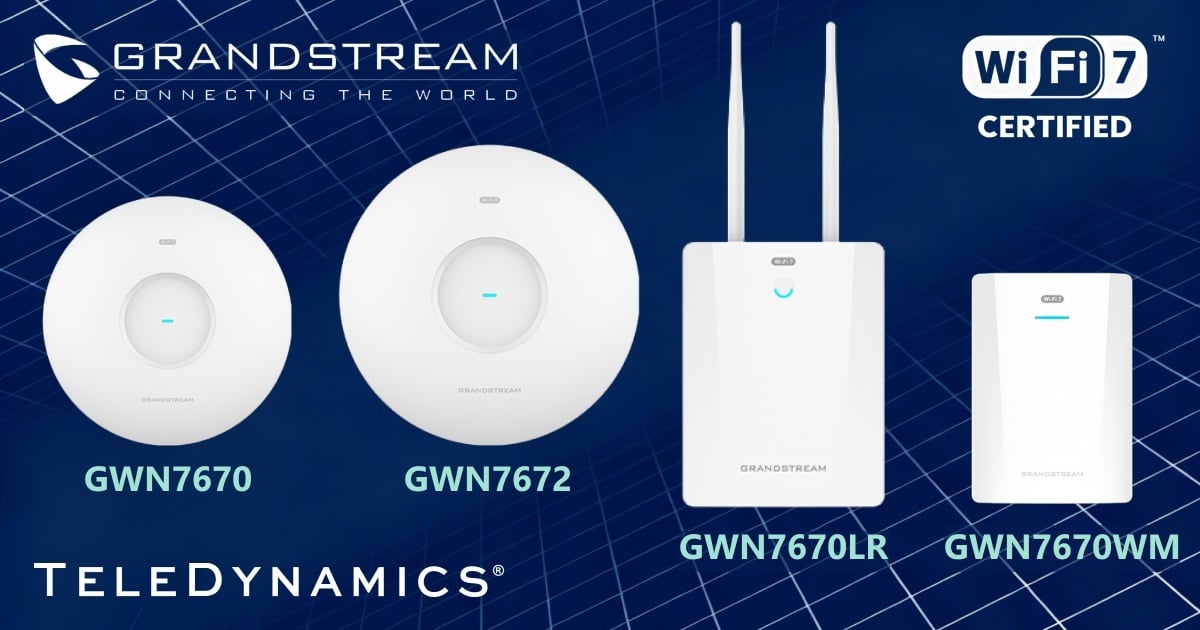
Wi-Fi 7 is a game-changing advancement for Wi-Fi networks, and Grandstream has gone all out to take advantage of its capabilities. With the GWN7670 series of wireless access points, Grandstream offers the performance, flexibility, and reliability that modern wireless networks demand.
In this article, we review these extraordinary devices, highlighting the most recent additions, the GWN7670WM and GWN7670LR, and underscoring the most noteworthy features and functions they offer to businesses of all types seeking to deploy robust and reliable wireless networks.
Read More
Topics:
VoWi-Fi,
Wireless,
Grandstream,
Product Review,
Wi-Fi
We’ve all been there—staring at a screen, trying to catch a colleague’s expression through pixelated video or straining to hear a muffled comment that could change the course of the discussion. The Yealink MeetingBar A50 aims to make those moments a thing of the past. Designed with powerful AI and studio-grade audio-visual technology, it delivers a meeting experience so natural you might forget it’s virtual.
Now let’s take a closer look at what makes the A50 stand out—from its intelligent multi-camera system and beamforming microphones to its seamless platform integration and simple setup.
Read More
Topics:
Yealink,
Videoconferencing,
Android,
Product Review,
Microsoft,
Collaboration,
Zoom,
AI
Hybrid and remote work have redefined the modern workplace. Teams now connect from headquarters, branch offices, home networks, coffee shops, and even while traveling — often switching between Wi-Fi, broadband, 5G, or satellite links in the process. With so many moving parts, keeping voice and video calls consistently clear can feel like an uphill battle. Dropped audio, frozen video, and lagging meetings are not only annoying, but they can be costly in terms of eroded productivity and hampered user experience.
This is where SD-WAN makes a difference. By intelligently orchestrating multiple types of connections, SD-WAN can turn this patchwork of networks into a reliable platform for communication. In this article, we’ll show you how SD-WAN helps overcome the pitfalls of underlay diversity, which mistakes to avoid when deploying it, and the best practices that ensure your UCaaS quality remains high. By the end of the article, you’ll be better equipped to assess your network strategy and support seamless collaboration no matter where your teams are working from.
Read More
Topics:
QoS,
Network Security,
Network Design,
SD-WAN,
UCaaS
One device, endless capabilities: Grandstream’s GCC6020 series brings together communications, security, VPN connectivity, and switching into a single, compact solution that seems almost unbelievable — until you see it in action.
This appliance combines an IP PBX, firewall, VPN router and network switch into one sleek platform. In this article, we examine the GCC6020 series and highlight its compelling characteristics for both small and mid-sized businesses. Read on to see how these devices make enterprise-grade performance easier and more affordable than ever.
Read More
Topics:
IP PBX,
QoS,
Total Voice Solution,
Grandstream,
Network Security,
Product Review,
Switches,
Unified Communications,
Firewall














.jpg)