Do you have a telephony deployment scenario where workers juggle multiple devices to make calls, scan barcodes, and assist customers—often in environments where speed and reliability are non-negotiable? If so, there's a smarter, more efficient solution on the market. Whether you're outfitting a warehouse, a hospital, or a retail floor, the Grandstream WP856 Wi-Fi smartphone consolidates voice, data, and scanning into one rugged, enterprise-grade device.
In this article, you’ll discover how this all-in-one solution can simplify your clients’ operations, reduce hardware overhead, and deliver real productivity gains—making it an easy win for your next deployment.
Read More
Topics:
VoWi-Fi,
SIP Phones,
Wireless,
Grandstream,
Mobility (including remote work),
Productivity,
Product Review,
Wi-Fi
Understanding the fundamentals of wireless internet service provider (WISP) network design is essential for providing connectivity solutions to customers, especially in rural or underserved areas. With demand for wireless broadband growing more than ever, WISPs play a key role in extending connectivity where traditional wired infrastructure isn’t feasible and where conditions are favorable to even compete against more traditional ISPs.
In this article, we walk through some of the most important design aspects of WISP networks, including recent developments in telecom and networking technologies that impact their performance and reliability.
Read More
Topics:
Wireless,
Trends,
Network Infrastructure,
WISP
Need a robust, reliable phone in a harsh environment where there is dust, water, humidity, extreme temperatures, or some combination of these conditions? Or perhaps the nature of the work carries a risk of dropping the phone? Meet the Grandstream WP836 ruggedized Wi-Fi cordless phone.
In this article, we review some of the extraordinary characteristics that make this phone ideal for a variety of use cases.
Read More
Topics:
SIP Phones,
Wireless,
Grandstream,
Mobility (including remote work),
Product Review,
Bluetooth,
Wi-Fi,
AI
Yealink's BH74 Bluetooth headset takes remote communications to the next level with some jaw-dropping features that make you wonder how you survived without it before! Offering extreme flexibility and seamless communication virtually anywhere, this headset is ideal for mobile, hybrid and remote workers, helping to maximize communication quality while minimizing fatigue.
This article reviews some of the noteworthy innovations of this headset and examines the available variations.
Read More
Topics:
Wireless,
Yealink,
Mobility (including remote work),
Headsets,
Productivity,
Product Review,
Bluetooth,
Microsoft
Despite the continued proliferation of wired telecom infrastructure in urban and suburban areas throughout the country, fixed wireless solutions are still a critical and essential “last-mile” technology. In this article, we look closely at fixed wireless solutions, exploring what they are, the various approaches used to implement them, and how they support current VoIP and UC implementations.
Read More
Topics:
Wireless,
Wi-Fi,
Unified Communications,
Communication,
5G,
WISP
It feels like just yesterday that Wi-Fi 5 was the latest breakthrough in wireless technology, while Wi-Fi 6 was on the horizon. Today, Wi-Fi 6 and 6E are widely accessible, while Wi-Fi 7 is beginning to emerge from some vendors. The pace of Wi-Fi’s technological advancement continues to accelerate, promising even more impressive innovations ahead.
What should we expect from Wi-Fi 7 in the coming months and years? Is it really that noteworthy, or is it just one more gimmick being used to attempt to make us upgrade our infrastructure and devices?
In this article, we look at the technologies that are making Wi-Fi 7 a reality, and what, in practical terms, that means for your wireless networks.
Read More
Topics:
Wireless,
Trends,
Wi-Fi
Internet Protocol version 6 (IPv6) is the successor to the well-established IPv4 network layer protocol. It is slowly but surely gaining ground worldwide on both internal corporate enterprise networks and on the internet at large.
But what does this mean for real-time audio and video communications applications such as VoIP and unified communications (UC)? How are VoIP and UC leveraging IPv6, and are there any issues that network admins must be aware of in this process? In this article, we answer these questions by examining the benefits and challenges of deploying such applications over an IPv6 network.
Read More
Topics:
Wireless,
Network Design,
IoT,
Unified Communications,
Protocols, codecs & standards
Wireless networks are often characterized using designations that reflect the specific capabilities they deliver. Commonly encountered classifications today include Wi-Fi 5 and Wi-Fi 6. But what exactly do these terms signify, and is the distinction between them important?
This article delves into these standards, highlighting their differences and shedding light on the prospects of Wi-Fi technology.
Read More
Topics:
Wireless,
Trends,
Wi-Fi
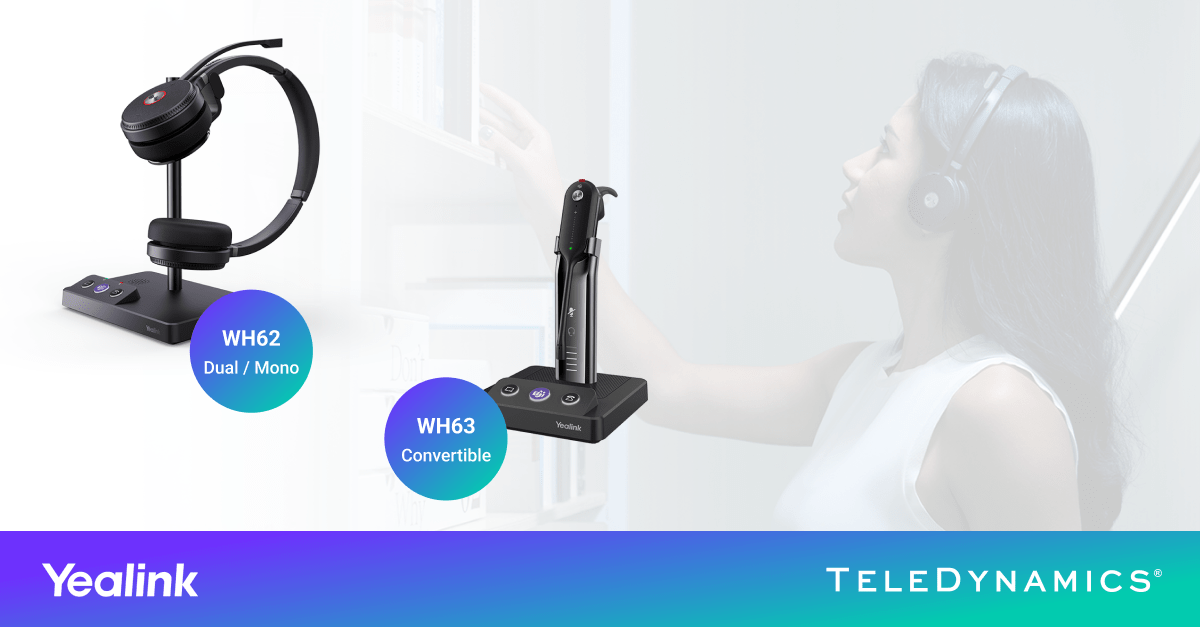
Yealink’s WH62 and WH63 are two of the most novel and functional headsets for a wide variety of business use cases. These devices are ideal for remote workers, high-call-volume employees, and contact-center scenarios.
Depending on the situation, these headphones constitute optimal choices for highly mobile users, noisy environments, and situations in which the user needs to remain aware of their surroundings. With the use of DECT technology, security, robustness, and long-range are all characteristics of these groundbreaking headsets.
One of the most beneficial aspects of these devices is the fact that they are highly compatible with a multitude of third-party desk phones, besides being fully compatible with Yealink desk phones as well. In this article, we’ll further examine this unprecedented level of compatibility.
Read More
Topics:
Wireless,
Yealink,
DECT,
Headsets,
Unified Communications
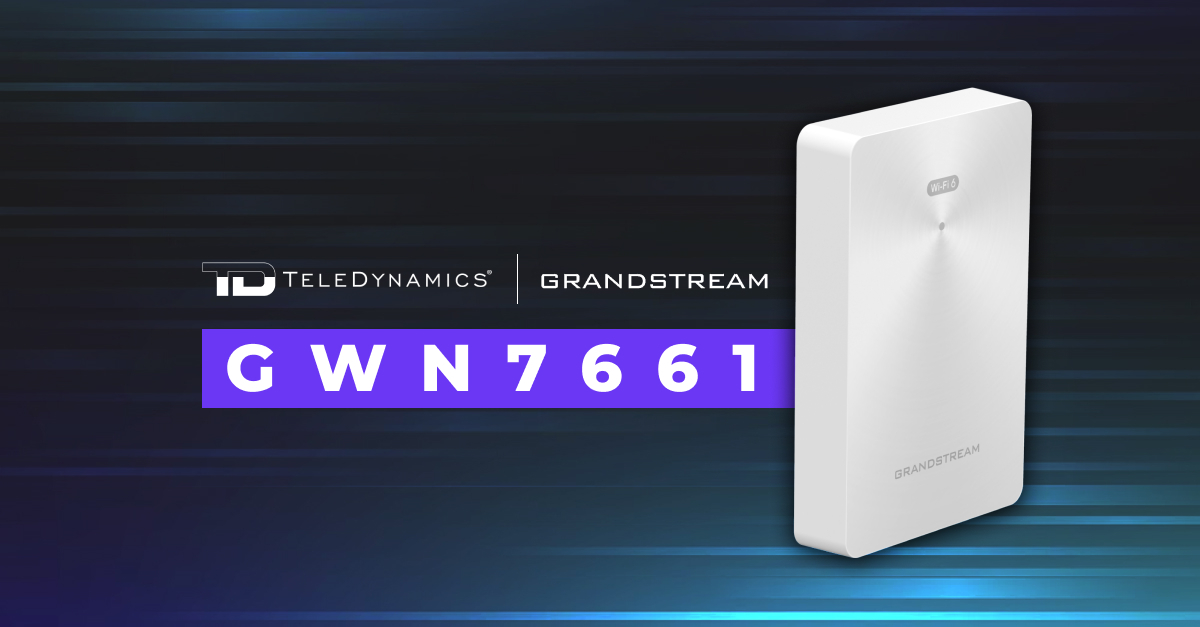
Grandstream just introduced its newest Wi-Fi 6 access point: the GWN7661. This compact, lightweight device with convenient wall-mounting options is an excellent addition to Grandstream's arsenal of wireless APs, and it will make a fine addition to any home or business, as well. In this article, we take an in-depth look into the benefits and value of this unique device.
Read More
Topics:
Wireless,
Grandstream,
Product Review,
Wi-Fi