Now that video communications have become a defining part of modern collaboration, it’s natural to wonder whether traditional voice-only VoIP systems still have a meaningful place in today’s environment.
For businesses evaluating their communications strategy, this question matters. Understanding where voice is headed helps leaders make informed decisions about infrastructure, reliability, user preferences, and long-term planning. In this article, we take a look at voice and video and explain why these two technologies will continue to coexist well into the future.
Read More
Topics:
VoIP,
Grandstream,
Trends,
Videoconferencing,
Yeastar,
Network Infrastructure
If you’ve ever left a meeting wondering what the key takeaways were, spent hours writing follow-up notes, or juggled too many communications tools that don’t quite talk to each other, help is here. Unified communications (UC) platforms are getting a major intelligence boost, and it’s transforming the way teams collaborate.
Read More
Topics:
Trends,
Productivity,
Unified Communications,
AI,
UCaaS
Most networks weren’t built for AI. The question is: will yours keep pace with the surge in bandwidth, compute, and security demands, or fall behind? AI workloads push infrastructure further than traditional data center design ever anticipated, and the organizations that adapt fastest will gain a competitive edge.
In this article, we explore the key network considerations every business must address to prepare for an AI-driven future.
Read More
Topics:
Trends,
Network Design,
Cloud,
Unified Communications,
AI,
Power Management,
Network Infrastructure
When you place a VoIP call or join a video meeting, the experience feels seamless—your voice and video just work. Behind the scenes, however, an invisible framework of computing models is orchestrating that experience, ensuring low latency, high reliability, and scalable performance.
Three of the most important concepts driving this evolution are cloud, edge, and fog computing. Each represents a distinct way of deploying compute power, and understanding their differences is key to building resilient VoIP and UC systems.
In this article, we demystify these models, explain how they shape the future of communications technologies, and show you where each one fits best in real-world deployments.
Read More
Topics:
VoIP,
Trends,
Network Design,
Unified Communications,
WAN Technology,
Network Infrastructure
Lighting is no longer just about illumination; it’s becoming an intelligent part of the network. As smart building technologies gain traction, Power over Ethernet (PoE) is emerging as a key enabler, extending far beyond its original role of powering network gear. One of the most exciting frontiers? PoE lighting.
In this article, we explore how PoE lighting can be seamlessly integrated into your existing infrastructure, and how resellers and system integrators can tap into this growing trend to expand their offerings, add value for clients, and stay ahead of the curve. We also take a look at what’s next for PoE as it powers a new era of low-voltage innovation.
Read More
Topics:
Trends,
IoT,
PoE,
Power Management,
Facility Management,
Network Infrastructure
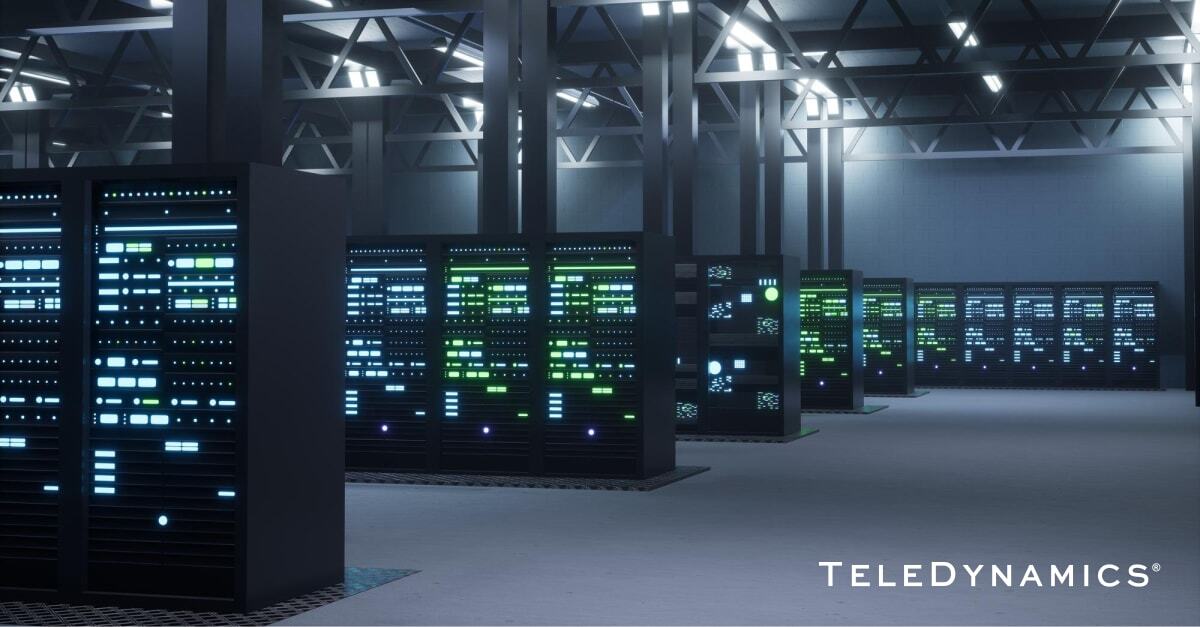
As AI continues to dominate the headlines, discussions abound about the infrastructure needed to support it, putting data centers at the heart of the conversation. Facilities of all types are drawing attention, not only for their enormous scale and the exorbitant power and resources they consume, but also for their promising potential for a wide range of services and applications.
It is vital for anyone involved with data center deployment to understand what drives data center design for AI. In this article, we dig deeper into data centers for AI and examine a particularly interesting real-world scenario that will help shed light on these emerging patterns.
Read More
Topics:
Trends,
AI,
Case Study
While AI has delivered marked improvements in our ability to solve the world’s biggest problems in healthcare, finance, manufacturing, retail, and more, these benefits are accompanied by real challenges. One of the most pressing challenges for delivering AI is the strains it puts on network and power infrastructure. As a result, new power plants are sprouting up to be able to fuel AI.
In this article, we explain why AI is so resource-intensive, and how data center design needs to be redefined to accommodate the needs of AI deployment.
Read More
Topics:
Trends,
AI,
Network Infrastructure
Understanding the fundamentals of wireless internet service provider (WISP) network design is essential for providing connectivity solutions to customers, especially in rural or underserved areas. With demand for wireless broadband growing more than ever, WISPs play a key role in extending connectivity where traditional wired infrastructure isn’t feasible and where conditions are favorable to even compete against more traditional ISPs.
In this article, we walk through some of the most important design aspects of WISP networks, including recent developments in telecom and networking technologies that impact their performance and reliability.
Read More
Topics:
Wireless,
Trends,
Network Infrastructure,
WISP
Wireless Internet Service Providers (WISPs) are some of the fastest-growing highly specialized service providers in the telecom sector; their proliferation has been noteworthy both in the United States and worldwide.
The Wireless Service Provider Association (WISPA)'s flagship annual conference and members meeting, WISPAPALOOZA, took place in Las Vegas in October of this year. In this article we provide a summary of some of the key takeaways from the event.
Read More
Topics:
Trends,
Events,
WAN Technology,
WISP
Blockchain has garnered significant attention in recent years as a technology capable of securely recording sequential transactions and maintaining consistent information across multiple computer networks. While it is often associated with cryptocurrencies, blockchain's characteristics also offer substantial advantages to supply chain logistics.
When combined with telecommunications technology, blockchain becomes a highly valuable mechanism for managing increasingly complex global supply chain processes. In this article, we explore the application of blockchain technology in supply chains and how telecommunications enhances its effectiveness.
Read More
Topics:
Trends,
Wi-Fi,
IoT,
Unified Communications,
Network Infrastructure