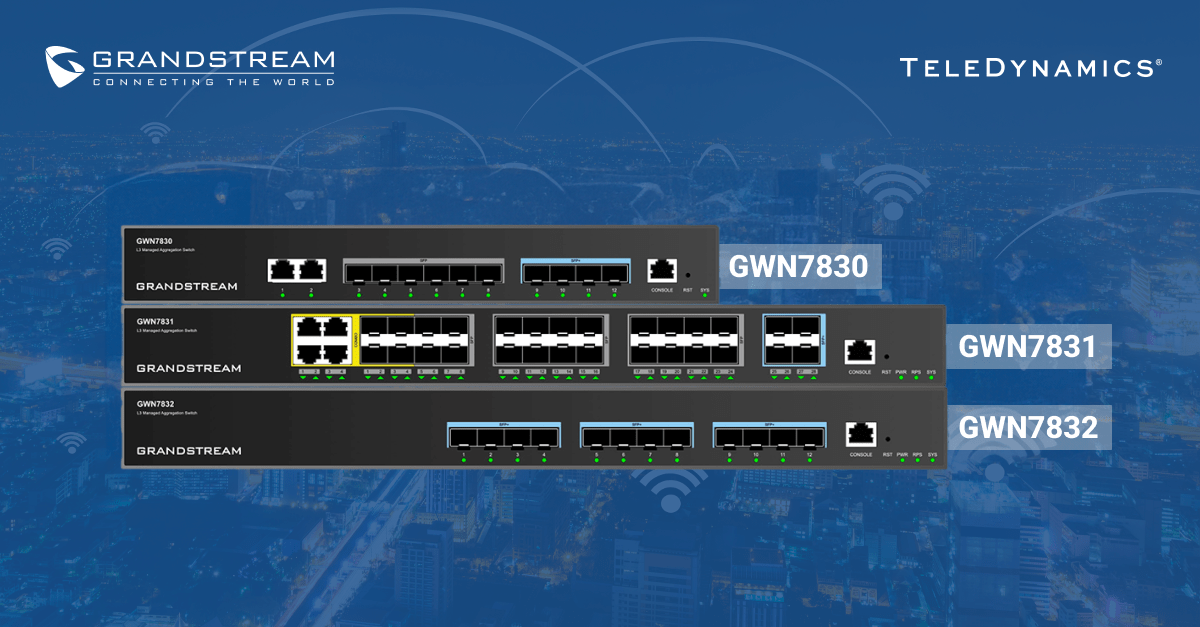
Grandstream is known for its high-quality network infrastructure equipment, and devices. The company recently introduced a new series of layer 3 network switches to its star-studded lineup. In this article, we review this series of devices, highlighting each unit's innovative features and describing some of the most common use cases for each.
Read More
Topics:
Grandstream,
Switches,
Unified Communications
By Brian Van Meter at Grandstream
As technology continues to advance, networks within offices, hotels, education spaces and other verticals have grown more complex. Phones, computers, IoT devices, smart technology and more can all be simultaneously running across a deployment’s Local Area Network (LAN). This can lead to issues with security, network organization, and scalability.
As a result of these roadblocks, Virtual Local Area Networks (VLANs) have become an increasingly popular feature that can help partition physical networks into virtually manageable ones. Within this blog post, we’ll give you an introduction to building VLANs with Grandstream’s GWN layer 2+ switches.
Read More
Topics:
Business Telephone System,
Grandstream,
Switches,
VLAN
Product Review
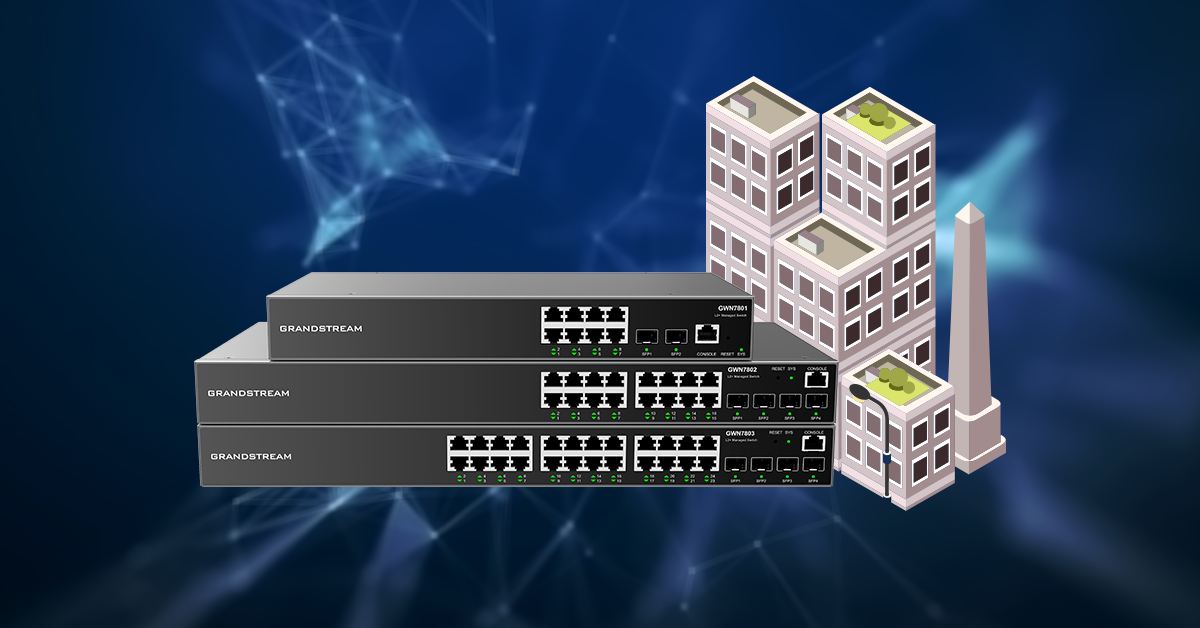
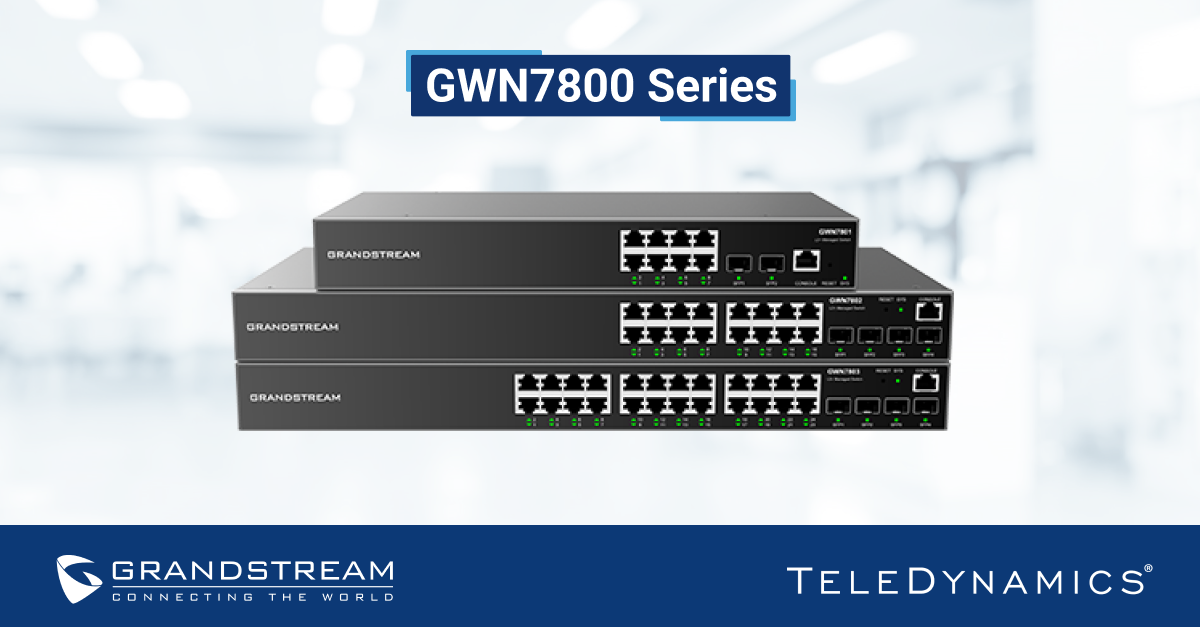
Grandstream is well known for its groundbreaking IP phones, but its innovation extends into other areas, including network infrastructure equipment and components. The new GWN7800 series of fully managed network switches is a prime example of the company’s leadership in this area.
This article showcases these switches and some advanced capabilities that allow network administrators to maintain comprehensive network control and security.
Read More
Topics:
SIP Phones,
IP PBX,
Grandstream,
Network Design,
Cloud,
Wi-Fi,
Switches
Most modern IP phones today support Power over Ethernet (PoE), an almost magical technology that powers your IP phone via the same Ethernet cable that connects it to the network. While it may seem simple on the surface, PoE technology is actually quite sophisticated, and is worth understanding when making choices involving network design or IP telephony hardware.
Read More
Topics:
Business Telephone System,
Network Design,
Switches
With more employees working from home to comply with social distancing measures currently in place, TeleDynamics has been getting a lot of requests for help with getting employees operational from home. In this article, we will review a number of ways you can enable an employee to use their company IP phone from home, as well as other methods for making and receiving calls without the need for special hardware.
Read More
Topics:
SIP Phones,
Mobility (including remote work),
Mobile,
Cloud,
Voicemail,
Switches,
Microsoft
A major challenge inherent in designing and maintaining an enterprise network is the administration costs. Software-defined networking (SDN) can dramatically reduce both the hard costs (money) and soft costs (time) of managing a network. Although this tends to be the most compelling argument in favor of using SDN, it in fact offers may more advantages than this. In this article, we introduce SDN and examine some of its key benefits.
Read More
Topics:
Trends,
Productivity,
Routers,
Network Design,
Gateway,
Switches,
Unified Communications
Cisco is a name familiar to almost anyone who has worked in networking or telecommunications over the past few decades. Founded in the mid-1980s, it pioneered some of the most fundamental concepts in networking, including LANs, WANs, and multiprotocol routing. In this article, we take a closer look at Cisco and its cutting-edge networking and telecommunications solutions.
Read More
Topics:
SIP Phones,
Headsets,
Gateway,
Switches,
Cisco
IP Telephony features are not always “plug-and-play.” Rather, they must be configured to function properly. This is equally true when dealing with quality of service (QoS) on a network that transmits both data and voice (i.e., a converged network).
Companies commonly find that when they install their VoIP system on a preexisting data network, it works great at first. Days or weeks later, however, users complain of poor voice quality and intermittent disconnections. The network has not changed, so what’s going on?
In this article, we’ll see why QoS is a fundamental part of your network design for voice, and examine five configurations that should always be employed to achieve high-quality voice on a converged network.
Read More
Topics:
QoS,
VoIP,
Routers,
Network Design,
Switches
Your customer using a legacy phone system decides to switch to voice over internet protocol (VoIP). They install an IP PBX and buy some IP phones. Great, they’re all set, right? Wrong. Without configuring their data network for quality of service (QoS), they will experience a severe deterioration in voice quality and may regret making the decision to switch. Yes, the IP PBX and the IP endpoints will already be configured for QoS. But what about other parts of the network like the pre-existing routers, switches and firewall? All it takes is one missing link for the whole system to be compromised.
QoS is a big topic. In this article, we’ll look at two main approaches to QoS: IntServ and DiffServ, their strengths and limitations, and when to use which one.
Read More
Topics:
QoS,
Business Telephone System,
VoIP,
Routers,
Network Design,
Switches
Product Review
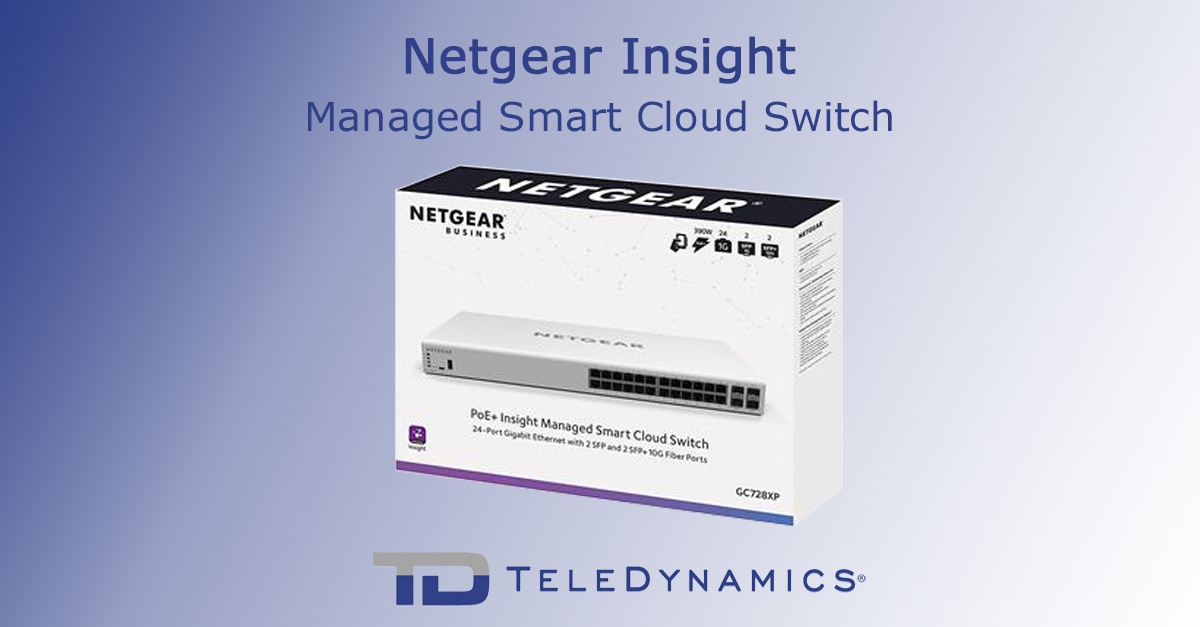
Netgear, a company with a heritage spanning over 22 years (an eternity in the telecom market), is steadily gaining prestige and recognition for the quality of its products and their attractive quality/price ratio (QPR).
In this article we review Netgear's Insight Managed Gigabit Ethernet/10G SFP+ Smart Cloud Switches, which are incredibly feature-rich considering their affordable price point!
Read More
Topics:
Network Design,
Product Review,
Switches