Daniel Noworatzky
Chief Technology Officer, TeleDynamics
Over the past few weeks we’ve been showcasing the deployment of wireless internet service providers (WISPs) and how they leverage various technologies to add value, flexibility, and reliability to their infrastructures. We examined how technologies such as LTE, MPLS, and cloud services are being employed to supplement WISP offerings.
But the innovation doesn’t stop there. There are a multitude of other technologies, protocols, and innovations that are being incorporated to bring about a new age of the WISP. We describe these in further detail in this article.
Read More
Topics:
Wireless,
Trends,
Events,
IoT,
Unified Communications,
WISP
Like all ISPs, Wireless ISPs (WISPs) benefit from the integration of other technologies with the services they provide. In previous articles, we saw how LTE and MPLS can be used in conjunction with WISP infrastructure to deliver more useful and flexible services to subscribers.
In this article, we continue our series devoted to the key themes at WISPAMERICA this year, taking a closer look at how cloud technologies can benefit WISPs and make their offerings more attractive and competitive.
Read More
Topics:
Wireless,
Trends,
Cloud,
Unified Communications,
WISP
Wireless Internet Service Providers (WISPs) play an integral role in delivering internet connectivity to areas where wired connectivity is not economically viable. Rural, remote, and mountainous regions are the primary areas where WISPs thrive. In many cases, WISPs are the only option for connectivity, making them a vital component of a nation’s telecom infrastructure.
There are many technologies that help support the services provided by WISPs. One that is being leveraged more and more in recent years is Multiprotocol Label Switching (MPLS). This topic received considerable airtime at WISPAMERICA this year.
Read More
Topics:
Trends,
Network Design,
WAN Technology,
WISP
Wireless Internet Service Providers (WISPs) have traditionally relied on the use of Wi-Fi technologies that leverage unlicensed frequency ranges of 2.4 and 5 GHz, along with all of the legal limitations that come with them. Recently, however, additional connectivity options have been made available and much more affordable to WISPs. Among those options is the use of Long Term Evolution (LTE) solutions. In this article, we examine how WISPs can use LTE for their networks, which was a topic of particular interest at WISPAMERICA this year.
Read More
Topics:
Wireless,
Trends,
Wi-Fi,
Regulations,
WAN Technology,
WISP
Product Review
Facility management systems are becoming more sophisticated and more deeply integrated with other systems. Video surveillance, intercom and paging, as well as security and access services, are just some of the systems that can be converged into a single service to deliver more functionality and flexibility to any organization.
In order to more effectively and efficiently manage these interconnected systems, Grandstream offers a series of facility management products and services, which we examine in this article.
Read More
Topics:
Grandstream,
Peripherals,
Software Integration,
Surveillance,
Facility Management
Product Review
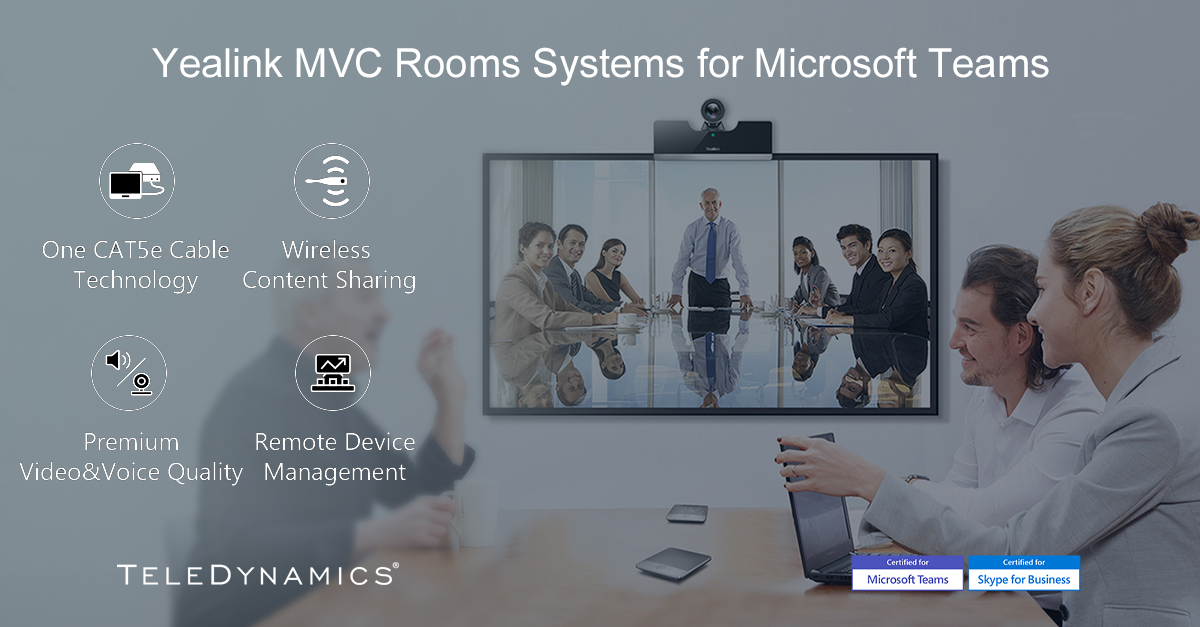
Microsoft Teams has become among the most extensively deployed collaboration platforms in the world. As such, Yealink has teamed up with Microsoft to deliver hardware that is not only compatible with the Teams platform, but also Microsoft certified. This guarantees an extensive level of compatibility with all of Microsoft’s innovative features.
In this article, we review Yealink’s MVC series of kits, known as Microsoft Teams Room Systems, that are designed to take full advantage of Teams collaboration features for meeting rooms, ranging from small focus rooms to extra-large conference rooms.
Read More
Topics:
Yealink,
Videoconferencing,
Conferencing,
Productivity,
Product Review,
Unified Communications,
Microsoft,
Collaboration
Now that many workers have had to adapt to working remotely since the pandemic, headsets have become increasingly popular because they free up users’ hands (and shoulders) for a more comfortable and flexible communications experience.
Yealink has developed numerous headsets with a wide range of features and functionalities to fit almost all communication requirements. Not only that, but Yealink has also introduced a full-line incentive program for its headsets, good through the end of 2021.
Read More
Topics:
Yealink,
Peripherals,
Headsets,
Productivity,
Product Review
We are excited to announce the launch of TeleDynamics’ Ribbon Connect for MS Teams service. Our collaboration with Ribbon Communications is an example of how partnerships can deliver products and services to that are greater than the sum of their parts. Keep reading to see what exciting possibilities this collaboration facilitates for your business, and save your spot for our webinar on 6 May.
Read More
Topics:
Software Integration,
Trends,
Productivity,
Unified Communications,
Microsoft,
Collaboration
Product Review
Organizations can do business only as well as they can communicate. In a world where work methods and locations are in flux, the flexibility, adaptability, and ease-of-use of companies’ communications equipment are vital.
With the introduction of the Teams-certified MP series of desktop phones, Yealink successfully continues its quest to provide the best communications equipment and services for companies of all sizes.
Read More
Topics:
Yealink,
Software Integration,
Trends,
Mobility (including remote work),
Android,
Product Review,
Bluetooth,
Unified Communications,
Microsoft
Product Review
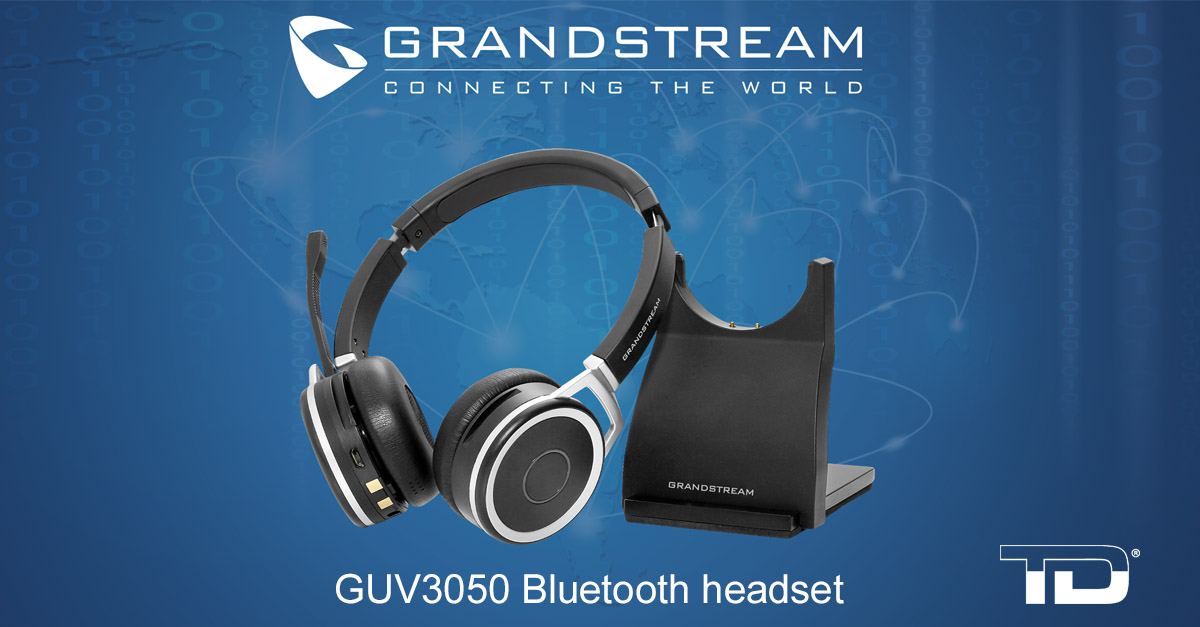
This article completes our three-part series on Grandstream’s GUV line of personal collaboration endpoints by focusing on the new GUV3050 Bluetooth headset, which delivers both comfort and performance to remote and onsite workers alike.
Read More
Topics:
Wireless,
Grandstream,
Peripherals,
Mobility (including remote work),
Headsets,
Productivity,
Product Review,
Bluetooth,
Unified Communications






.jpg)
.jpg)